
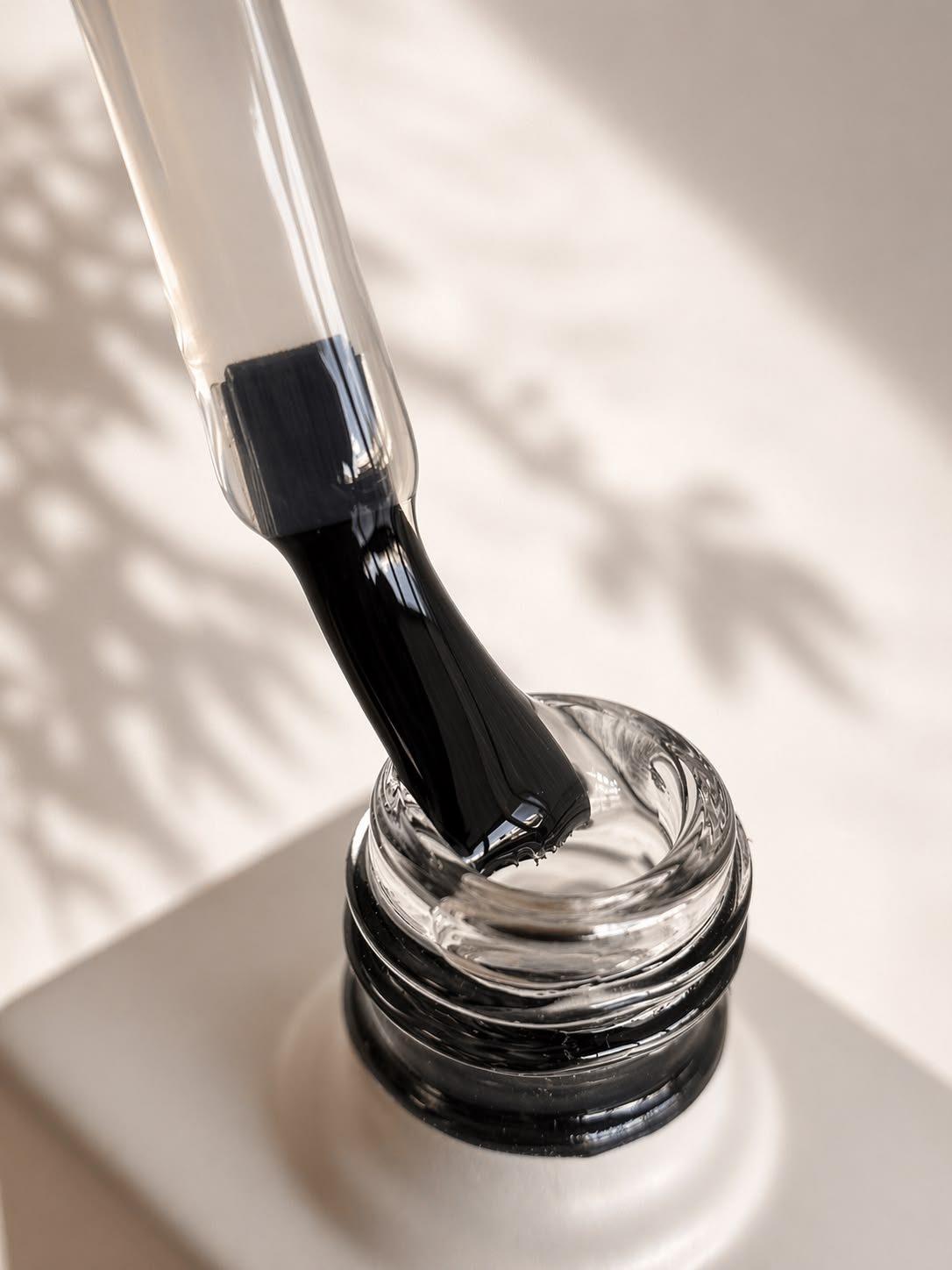
Rubber Base for Nails: What It Is, When to Use It, and Why It Has Become So Popular
Some nails can wear gel polish for weeks without any problems.
And then there are the others.
They are thin, flexible, prone to breaking at the edges, or simply seem as though a regular base coat is never quite enough.
That is where a rubber base often comes in.
At first glance, it may look like just another gel polish base coat. In practice, however, it is slightly different: it is thicker, more flexible, can smooth out minor irregularities in the nail plate, and can provide additional mechanical support to the natural nail while it is being worn.
But a rubber base is not a magic solution for every nail, and not every rubber base should be used in exactly the same way.
That is why it is important to understand what it actually does, who it may be suitable for, and where the role of a base coat ends and the role of a builder gel begins.
What Exactly Is a Rubber Base?
A rubber base is a type of gel base coat with a more flexible and usually thicker formula than a traditional thin gel polish base.
The name comes from the word rubber, but that does not mean the product actually contains rubber. Instead, the name describes the way the material behaves: once properly cured, it remains flexible enough to follow some of the natural nail’s movement rather than becoming completely rigid.
Professional technical guides describe rubber bases as flexible, self-leveling base coats designed to provide additional support to the natural nail, smooth out its surface, and create a more stable foundation for gel polish.
This can be especially useful for nails that bend easily.
If a very flexible natural nail is covered with a material that behaves completely differently, cracking or lifting may occur more easily where those movements meet. A more flexible base can follow the movement of the natural nail more effectively.
However, there is one important distinction:
A rubber base supports the nail while the product is being worn — it does not permanently change the structure of the natural nail.
Once the product is removed, the natural nail plate underneath remains the same nail plate it was before.
When Does a Rubber Base Make the Most Sense?
Rubber base can be particularly useful for short to medium-short natural nails that are thin, flexible, prone to bending, or have minor surface irregularities.
Its thicker consistency allows the surface to be visually leveled while creating a thin, controlled layer of reinforcement over the natural nail.
It can also be a good option if you prefer a more natural-looking manicure without an additional layer of color. Many rubber bases are available in milky, pink, beige, and other neutral shades, so when paired with a top coat, they can work almost as a complete manicure on their own.
However, rubber base is not automatically the best choice for every nail.
If more substantial structure, additional length, or significant architectural correction is needed, builder gel or another structural system may be more suitable. Professional guidelines make a clear distinction between flexible rubber bases intended for shorter reinforcement and builder gels designed to create greater strength, structure, and length.
In other words:
A rubber base can reinforce the nail, but it is not a replacement for every type of builder product.
What About the Apex?
This is one area where rubber base is often mistakenly presented as a product that can do everything.
On shorter natural nails, and with products whose formulas allow it, a rubber base can be used for light leveling and minor structural correction, including subtle reinforcement of the stress area.
However, that is not the same as building a pronounced apex on a long nail.
The longer the nail, the greater the forces acting on its stress area. In those cases, the material needs appropriate structural properties, and a classic flexible rubber base may simply not be designed for that purpose.
That is why a product should not be chosen based on what can somehow be done with it, but on what that particular formula was designed to do.
Self-Leveling Does Not Mean “It Will Do Everything by Itself”
One of the reasons many nail technicians like rubber bases is their self-leveling ability.
When applied correctly, the material gradually evens itself out and can help smooth minor irregularities on the surface of the nail.
But “self-leveling” does not mean that you can apply a large amount of product and simply wait for it to create perfect nail architecture on its own.
Too much product can flood into the sidewalls, come into contact with the skin, or create an overly thick layer that is not suitable for the way the product is designed to cure.
That is why controlling the amount of product, its placement, and the time before curing still depends on the technique of the person applying it.
The material levels itself. The nail technician guides it.
Clear or Colored Rubber Base?
Both have the same basic purpose, but they create very different final effects.
A clear rubber base is practical when you want a completely neutral foundation under gel polish or nail art. It does not add pigment to the nail and leaves the natural nail plate visible.
Colored rubber bases contain pigment and can help conceal minor discoloration or visually even out the nail plate. They are most commonly available in milky, soft pink, and beige shades.
That is exactly why they are so popular for French manicures, soft neutral sets, and minimalist nails.
And sometimes, you do not need an additional color at all.
A rubber base in the right shade, a few carefully chosen details, and a top coat can make up the entire manicure.
A Good Rubber Base Manicure Starts With Good Preparation
Just like with gel polish, even the best product will not perform well if the nail underneath has not been prepared properly.
The natural nail should be shaped and prepared according to the system being used, dust and debris should be removed, and contact between the product and the skin should be avoided.
The following steps depend on the specific product. Some systems require an additional primer or separate base layer, while in others the rubber base itself forms part of the adhesion system.
Interesting Fact: “HEMA-Free” Does Not Automatically Mean “Allergy-Free”
In recent years, the HEMA-free label has become increasingly common.
HEMA, or 2-hydroxyethyl methacrylate, is one of the known allergens found in nail products and has been associated with allergic contact dermatitis.
However, a product that does not contain HEMA may still contain other acrylates or methacrylates.
In 2024, professional medical literature even documented a case of allergic contact dermatitis caused by a gel product labeled HEMA-free because the formula contained other acrylates and isocyanates.
This does not mean that gel products should be avoided.
It means that a single label on the bottle does not replace proper technique.
The most important rules remain the same: the product should not come into contact with the skin and should be fully cured according to the manufacturer’s instructions.
If itching, redness, swelling, blisters, or persistent skin changes around the nails appear after a manicure, applying another layer of product over the problem is not the solution.
Such reactions should be taken seriously.
Rubber Base Does Not “Heal” Thin Nails
This is another common myth worth clearing up.
If the natural nails are very thin, a rubber base can make them feel stronger and more stable while it is being worn, because there is an additional layer of material over them.
But it does not nourish the nail or permanently transform a thin nail plate into a thicker one.
The nail plate is a keratin structure, and the condition of the visible part cannot simply be restored by applying a cosmetic product.
A more accurate way to put it is:
Rubber base strengthens the manicure — it does not change the biology of the natural nail.
And that is exactly why its removal needs to be just as careful as its application.
How Should It Be Removed?
There is no single answer that applies to every rubber base.
Many products are soak-off, meaning they are formulated to soften with an appropriate removal product, while other systems may require controlled filing or a combination of removal methods.
What is universally a bad idea, however, is:
“It has lifted a little, so I’ll just pull it off.”
The American Academy of Dermatology advises against peeling or scraping gel products off with your nails or other objects, as this can also remove superficial layers of the natural nail plate along with the product.
If the product is designed to be removed with acetone, dermatologists recommend limiting acetone exposure primarily to the nails rather than unnecessarily soaking the entire hand.
In other words:
Proper removal is part of a good manicure.
When Might Rubber Base Not Be the Best Choice?
Just because a product is popular does not mean it is suitable for everyone.
Very long nails that require more substantial structure may need a stronger builder system.
A severely damaged, painful, or visibly altered natural nail is not something that should simply be covered with rubber base.
If there is separation of the nail from the nail bed, unusual discoloration, swelling, itching, pain, or a suspected infection, the problem should be addressed first rather than hidden under product.
The American Academy of Dermatology warns that gel and artificial nail systems can be associated with brittleness, peeling, and cracking, particularly when products are applied or removed aggressively.
The best product is not the one you can put on every nail.
The best product is the one that suits the specific nail and the specific goal.
In Short
Rubber base is a more flexible and usually thicker gel base coat that can provide additional mechanical support to the natural nail, smooth out minor irregularities, and create an even foundation for further product application.
It can be particularly suitable for shorter, thin, and flexible natural nails.
It can be clear or pigmented, and colored rubber bases can also be used as part of a minimalist manicure without an additional layer of color.
However, not every rubber base is a builder gel, not every formula is designed for creating length, and not every rubber base is removed in the same way.
The most important thing is to follow the intended use of the specific product, apply the correct amount, use the appropriate lamp, and follow the recommended curing time.
And perhaps most importantly:
A rubber base is not good simply because it is “rubber.”
It is good when it is the right product for the right nail.
Sources
For professional information on flexible rubber bases, their intended use, self-leveling properties, and differences compared with standard base coats and builder gels, current professional technical guidelines and gel system recommendations from 2025 and 2026 were consulted.
For information on acrylates and methacrylates in nail products, including HEMA and the risk of allergic contact dermatitis, research available through PubMed was used, including recent studies on the composition of nail cosmetics and professional reports on allergic reactions.
For recommendations on the safe wear and removal of gel products, protection of the natural nail plate, and how to respond to nail changes, guidance from the American Academy of Dermatology Association was consulted.